
Introduction
Now, from the comfort of your home—using just a mobile phone or laptop—you can perform almost every banking-related task in a fast, secure, and convenient manner. In this article, we will explore in detail what smart banking is, its benefits, various types, security measures, and how it simplifies your daily life.
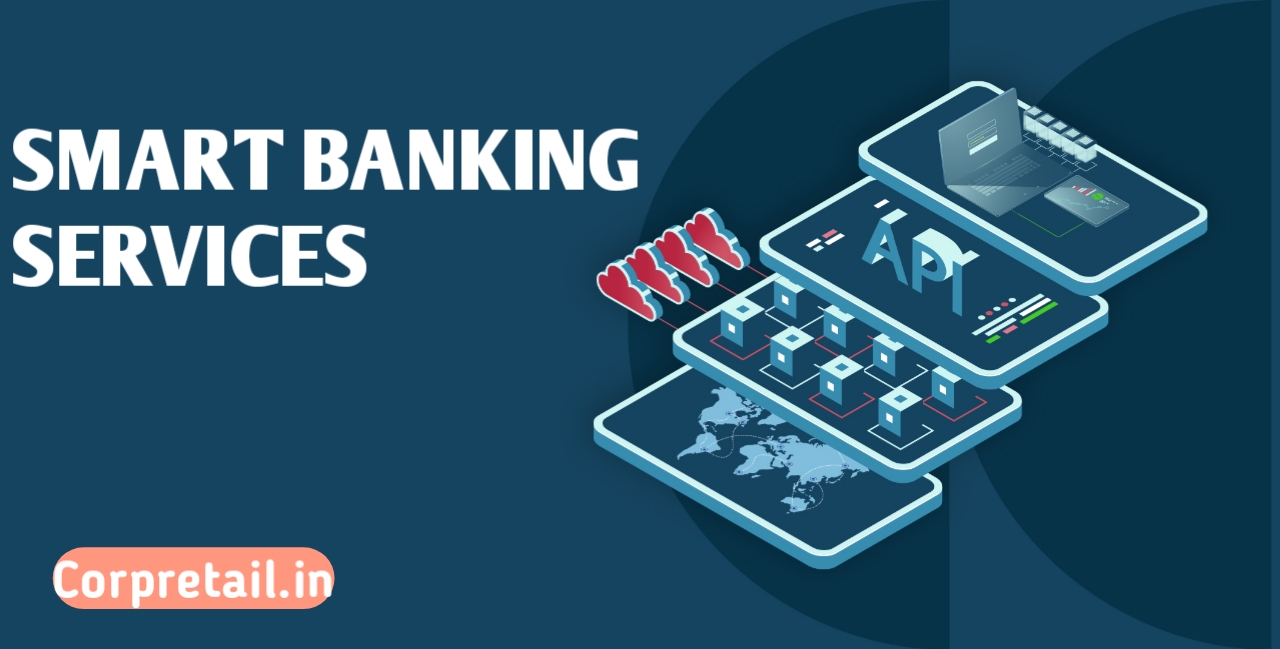
What is Smart Banking?
The primary objectives of smart banking are:
- To save customers’ time
- To simplify the banking process
- To provide 24×7 service availability
- To offer enhanced security
Types of Smart Banking Services.
1. Mobile Banking
Through mobile banking apps, you can:
- Check your account balance
- Transfer funds
- Pay bills
- View mini-statements
This service is immensely popular because almost everyone owns a smartphone today.
2. Internet Banking
We can do our own banking work through internet:
- Conduct online transactions
- Open Fixed Deposits (FDs) or Recurring Deposits (RDs)
- Apply for loans
This service can be conveniently accessed from either the office or home.
3. UPI and Digital Payments
UPI has made the payment system incredibly simple. It enables:
- Money transfers in a matter of seconds
- Payments via QR code scanning
- Transactions without the need for specific bank account details
Today, UPI is being utilized everywhere—from small shopkeepers to large-scale businesses. —
4. ATM and Card Services
With the help of ATMs and Debit/Credit cards, you can:
- Withdraw cash
- Check your balance
- Shop online
These services remain a vital part of smart banking today.
5. E-Wallets and Fintech Apps
Apps like e-wallets allow you to store funds and easily perform tasks such as:
- Mobile recharges
- Bill payments
- Online shopping
Benefits of Smart Banking
✔️ 1. Time-Saving
There is no longer any need to visit a bank branch; tasks can be completed in just a few clicks.
✔️ 2. 24×7 Availability
Whether day or night, you can access banking services at any time.
✔️ 3. Secure Transactions
Features such as OTPs, PINs, and biometrics significantly enhance security.
✔️ 4. Paperless System
Smart banking reduces paper usage, which is beneficial for the environment.
✔️ 5. Easy Tracking
You can instantly view a record of every transaction you make.
Why is Smart Banking User-Friendly?
Smart banking is designed in such a way that people of all age groups can use it with ease.
- Simple interface
- Availability in Hindi and other languages
- Easy navigation
- Instant assistance (Customer Support)
All these factors make it truly user-friendly
Security Measures in Smart Banking
🔒 Essential Tips
- Do not share your OTP with anyone
- Set strong passwords
- Avoid banking over public Wi-Fi networks
- Use only official banking apps
- Change your password regularly
The Importance of Smart Banking in Rural India
Smart banking has successfully extended financial services to villages as well.
- Reduced reliance on physical bank branches
- Promotion of digital payments
- Direct access to benefits from government schemes
This is helping to realize the dream of a Digital India. —
Smart Banking for Business
Smart banking has become very beneficial for the customers like online transactions and receiving or giving money:
- Accepting online payments
- Simplified account management
- Cashless transactions
- Receiving instant payments
The Future of Smart Banking
In the times to come, smart banking is set to become even more advanced:
- Artificial Intelligence (AI)-based services
- Voice banking
- Facial recognition login
- Even faster and more secure transactions
Conclusion
Smart banking has made many tasks easier such as online transactions. It is transforming the lives of people not only in urban centers but also in rural areas. Thanks to user-friendly features, everyone can now easily avail the benefits of digital banking. Smart banking provides convenient, secure, and 24×7 digital services like mobile apps, internet banking, UPI, cards, and e-wallets, saving time, enabling paperless transactions, easy tracking, and supporting both urban and rural users.