
Introduction
Loans play a crucial role in purchasing a home, covering educational expenses, starting a business, and various other endeavors. However, without proper knowledge regarding loans, the burden of repayment can become overwhelming, potentially having a negative impact on one’s life. In this article, we will outline the basics of bank loans and provide guidance on their prudent usage—making this information accessible even to beginners.
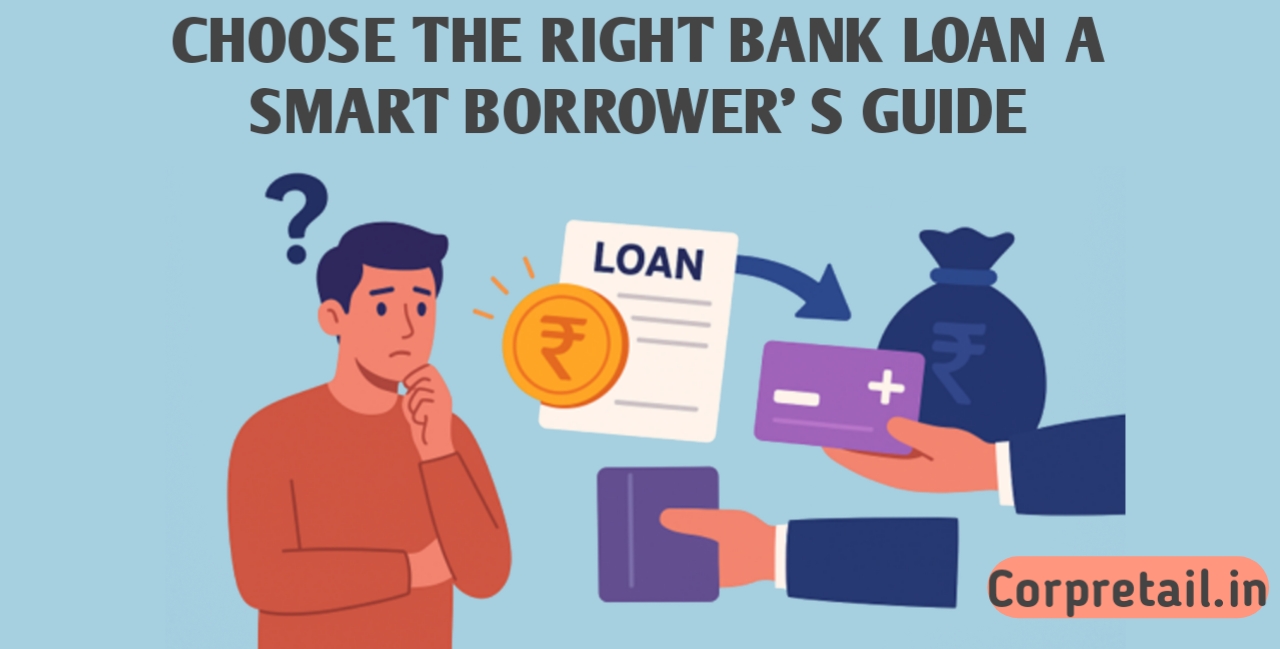
What is a Bank Loan?
A bank loan is a type of financial service that involves borrowing money with the obligation to repay it within a specified timeframe.
Its key characteristics include:
- Stable returns for the lender
- A highly reliable financial institution
- A wide variety of loan products
Types of Bank Loans
Bank loans come in various forms. It is essential to select the right loan based on your specific objective.
1. Residential Loan (Home Loan)
A loan taken for the purpose of purchasing or constructing a home; it offers a long repayment tenure and has the distinct advantage of being available at relatively low interest rates.
2. Auto Loan (Vehicle Loan)
A loan obtained specifically for purchasing a vehicle; the repayment period for such loans typically ranges from 3 to 7 years.
3. Education Loan
This loan is taken to cover the costs of education, including expenses related to studying abroad. It is often viewed and utilized as an investment in one’s future.
4. Personal Loan
Usage: This loan can be utilized for any purpose—whether to cover unexpected expenses, travel costs, or various other personal needs.
5. Business Loan
This loan is obtained by a company or an individual business owner for the specific purpose of raising capital to support their business operations.
Benefits of Taking a Loan
There are several advantages to taking out a bank loan.
- Access to a lump sum amount all at once
- Flexibility to withdraw funds as per your needs
- The overall impact can be highly beneficial
In particular, if you consistently repay your loan on time, you may be able to secure future loans on even more favorable terms.
Potential Downsides to Conside
On the other hand, taking out a loan also entails certain risks:
- The burden of interest payments
- Damage to your credit score (creditworthiness) in case of delayed repayment
It is crucial to pay close attention to these factors, as they could make it difficult for you to obtain a loan again in the future. ## **Tips for Borrowing Smartly**
1. Clarify Your Purpose
Be clear about *why* you need the loan. This helps you avoid taking out loans unnecessarily.
2. Plan Your Repayment Schedule
It is essential to analyze your monthly income and expenses, and to formulate a repayment plan that excludes unnecessary spending.
3. Compare Benefits
The benefits offered vary from bank to bank. Compare offers from multiple financial institutions to select the most favorable terms.
4. Manage Your Credit Information
Delays in credit card payments and similar lapses will negatively impact your credit score.
5. Determine the Minimum Necessary Loan Amount
Taking out a loan inherently increases your repayment burden. Therefore, you should only borrow when it is absolutely essential.
The Loan Application Process
The standard application process for a bank loan typically follows these steps:
- Gathering information and comparing options
- Submitting the application
- Verification (Assessment of income and credit information)
- Approval and signing of the contract
- Disbursement of funds
- Commencement of repayment
Be prepared for the possibility that the verification process may take some time.
The Interest Rate System
Interest rates function essentially as a fee paid in exchange for borrowing money.
These primarily fall into two categories
Fixed Interest Rate:
A repayment period during which the interest rate remains unchanged.
Variable Interest Rate:
The interest rate and rate keep increasing according to the market conditions.
Both options have their own respective advantages and disadvantages; therefore, choose the option that best suits your specific situation.
Common Mistakes and How to Avoid Them
Mistake 1:
Borrowing beyond your repayment capacity
→ Solution:
Limit your borrowing to within 30–40% of your income.
Mistake 2
Failing to compare interest rates
→ Solution:
Compare interest rates offered by multiple banks.
Mistake 3
Not understanding the terms of the contract.
→ Solution:
Read the contract carefully.
Digital Economy Loans
This process can be completed using a smartphone or a computer, and the time required for verification has also been significantly reduced. Thanks to advancements in technology, convenient services—such as AI-based credit checks and instant loan approvals—are becoming increasingly prevalent.
Conclusion
If utilized correctly, a bank loan can serve as a highly valuable financial tool. However, it is crucial to assess your personal situation and proceed with caution—particularly if you lack complete information or are contemplating taking on a significant risk. In conclusion, let us briefly recap the key takeaways:
- Use the loan solely for its intended purpose.
- Create a straightforward and manageable repayment plan.
- Prioritize and maintain a healthy credit profile.
By keeping these points in mind, you can utilize bank loans in a safe and effective manner. Let us secure a smart loan and build a brighter future.